
Freestanding TV Stand for Flat Screens: The Complete Guide
Everything you need to know before buying a freestanding TV stand for your flat screen television — sizes, materials, stability, and how to match one to your room.
Why a freestanding TV stand? Unlike wall mounts, a freestanding TV stand for flat screens requires no drilling, no stud finding, and no landlord approval. It is the most flexible, renter-friendly, and often the safest option for holding a modern flat screen TV — provided you choose the right one for your screen size and room layout.
What Is a Freestanding TV Stand for Flat Screens?
A freestanding TV stand is a self-supporting piece of furniture that holds your television without being attached to a wall. It sits directly on the floor and relies on its own base, legs, or cabinet body for stability. This is in contrast to wall-mounted brackets, ceiling mounts, or floating shelves that require structural anchoring.
Modern flat screens are thinner and lighter than the bulky CRT televisions of the past, which means freestanding stands can now be slimmer, more elegant, and more versatile. You will find freestanding options ranging from minimalist metal frames to full TV stands with storage for living room use, complete with drawers, shelves, and cable management.
Why Choose a Freestanding TV Stand Over a Wall Mount?
There are several situations where a freestanding TV stand is simply the better choice:
- Renter-friendly: No holes in the wall, no damage deposit worries, and no need to locate studs.
- Flexible placement: You can move the TV and stand together whenever you rearrange the room.
- No structural risk: Avoids the danger of a poorly anchored wall mount pulling out of drywall, especially relevant for heavy screens — see our guide to mounting a 75 inch TV on the wall for context on those risks.
- Built-in storage: Many freestanding models double as media consoles with space for consoles, soundbars, and remotes.
- Cable management: Freestanding units often include channels and compartments that hide wires far more easily than a bare wall mount.
How to Choose the Right Freestanding TV Stand for Your Flat Screen
1. Match the Stand to Your TV Size
The single most important factor is size. A stand that is too small for your TV creates a tipping hazard; one that is too large looks disproportionate. As a rule of thumb, the stand should be at least as wide as your television, and ideally a few inches wider on each side.
For smaller screens, a small TV stand for 55 inch TV works well in apartments and bedrooms. For larger screens, look at a TV stand for 85 inch flat screen or a white TV stand for 85 inch TV if you want a lighter look. Mid-size setups are well served by a slim TV stand for 65 inch TV or a low TV stand for 55 inch TV that keeps sightlines comfortable.
2. Check the Weight Capacity
Flat screens vary widely in weight. A 55-inch LED TV might weigh around 30 pounds, while a 75-inch model can exceed 70 pounds. Always check the stand's stated weight capacity and leave a safety margin of at least 20–30%. Heavier TVs benefit from stands with a wide, low base and solid hardwood or metal construction rather than particleboard.
3. Consider Stability and Anti-Tip Features
Freestanding stands are generally very stable, but children and pets can still cause accidents. Look for models with anti-tip straps or wall-anchoring kits included, even if you do not plan to use them immediately. A low center of gravity — meaning the TV sits close to the base rather than on a tall pedestal — dramatically reduces tipping risk. A short TV stand for 55 inch TV is a good example of a low-profile, stable design.
4. Choose the Right Material
Materials affect durability, appearance, and price:
- Solid wood and oak: Extremely durable and long-lasting. An oak TV stand for 50 inch TV is a classic investment piece.
- Engineered wood: Affordable and available in many finishes. Common in black TV stand types and budget-friendly models.
- Metal: Sleek and modern. A metal TV stand for 75 inch TV offers an industrial look with excellent strength-to-weight ratio.
- Glass and mixed materials: Visually light and contemporary, often paired with metal frames.
5. Match the Style to Your Room
Your stand should complement the rest of your decor. Popular directions include:
- Mid-century living room styles with tapered legs and warm wood tones.
- Rustic TV consoles in reclaimed or distressed wood finishes.
- Boho TV stand options with woven or rattan details.
- White TV stands for bright, airy spaces — see also our TV stand for bright spaces guide.
- Black TV stand with black and gold accents for a glam, modern look.
Freestanding vs. Other TV Stand Types
It helps to understand how freestanding models compare to alternatives:
- Freestanding: Sits on the floor, fully self-supporting, easiest to relocate. Best for renters and flexible layouts.
- Wall-mounted: Saves floor space but requires drilling. See 65 inch flat screen TV wall mount for an example of what that involves.
- Corner units: A corner TV stand for 65 TV is technically freestanding but shaped to fit into a corner, saving space in smaller rooms.
- Mobile / portable: A mobile TV stand for 75 inch TV adds casters so you can roll the TV between rooms — great for home gyms and classrooms.
- Tabletop: A tabletop TV stand for 75 inch TV replaces the factory legs and sits on existing furniture rather than the floor.
Special Features Worth Considering
Once you have the basics covered, these upgrades can make a freestanding stand far more useful:
- Integrated fireplace: A TV stand with fireplace adds warmth and ambiance without needing a real chimney. For larger screens, see the fireplace TV stand for 85 inch TV and the TV stands with fireplace for 65 inch TVs.
- Corner fireplace designs: A corner TV stand with fireplace combines two space-saving ideas in one.
- Storage: A TV stand with storage for small spaces keeps consoles and cables organized.
- Risers: A TV stand riser for 55 inch TV lifts the screen for better viewing angles and adds a shelf underneath.
- Protection: A TV stand protector guards against scratches and spills, especially in homes with pets or children.
How Much Should You Expect to Pay?
Freestanding TV stands for flat screens span a wide price range depending on material, size, and features:
- Budget (under $150): Basic particleboard or metal frames for small to mid-size TVs.
- Mid-range ($150–$500): Solid construction, better finishes, storage, and cable management. Most shoppers land here.
- Premium ($500–$1,500): Solid hardwood, large sizes, integrated fireplaces, and designer styling.
- Luxury ($1,500+): Custom-built or oversized units for very large screens and statement rooms.
If you are weighing a custom route, our guide to custom built-in entertainment center cost explains why built-ins sit at a completely different price tier than freestanding furniture.
Placement Tips for Freestanding Stands
Where you place the stand matters as much as which one you buy:
- Eye level: The center of the screen should sit roughly at seated eye level. A low stand helps achieve this without craning your neck.
- Distance: Sit about 1.5 to 2.5 times the screen size away. A 65-inch TV is comfortable at roughly 8–13 feet.
- Lighting: Avoid placing the screen opposite a bright window. Pair the setup with dimmable floor lamps for living room to control glare and ambiance.
- Fireplace layouts: If you have a fireplace, see living room layouts with fireplace and TV and family room designs with fireplace and TV for proven arrangements.
- Bedroom use: A TV on top of dresser in bedroom is a common freestanding alternative when a full stand feels like too much furniture.
Common Mistakes to Avoid
- Buying a stand narrower than the TV: This is the most common and most dangerous mistake.
- Ignoring weight limits: Oversized TVs on flimsy stands are a tipping risk.
- Skipping anti-tip anchoring: If you have kids or pets, anchor the stand and TV.
- Forgetting ventilation: Electronics inside closed cabinets need airflow to avoid overheating.
- Overlooking cable management: Plan where wires will run before you assemble the unit.
Recommended Freestanding TV Stand for Flat Screens
⚠️ AFFILIATE DISCLOSURE: This website contains affiliate links. As an affiliate Associate, we earn from qualifying purchases. If you make a purchase through these links, we may receive a small commission at no additional cost to you. Read our full affiliate policy.

YOMT Universal TV Floor Stand with Mount for 27-70 Inch LCD LED OLED TVs, Swivel Height Adjustable Tall TV Stand, Space Saving Design for Corner Bedroom Living Room, Black
Check price on Amazon
Rfiver Mobile TV Stand for 23-65 Inch Flat/Curved TVs up to 88 lbs Black | Rolling TV Stand with Adjustable Shelf & Tilt, Portable Floor Stand on Wheels for Bedroom, Living Room, Max VESA 400x400mm
Check price on Amazon
PERLESMITH Rolling TV Stand, Mobile TV Stands for 23-65 Inch LCD LED TVs, Tilt TV Stand Wheels Holds up to 88Lbs, Portable Outdoor TV Cart for Bedroom with Shelf, Max VESA 400x400mm PSTVMC06
Check price on Amazon
WALI Floor TV Stand with Power Outlet, Tall TV Stand Mount for 32-75 inch TV up to 110 lbs, Swivel and Height Adjustable TV Stands with Wood Base for Bedroom, Living Room(TVDVD-7P), Black
Check price on Amazon
TVON TV Floor Stand for 13-50 inch TVs up to 44 lbs, Max VESA 200x200mm | Tilting and Rotating Mount, Portrait to Landscape, Height Adjustable Portable TV Stand for Bedroom, Office
Check price on Amazon
VIVO Extra Tall Height Adjustable TV Floor Stand for 13-65 in Screens | LCD LED OLED 4K Smart Flat & Curved Panels, For Treadmills & Ellipticals, Max VESA 400x400, Holds 44 lbs, Black, STAND-TV18
Check price on Amazon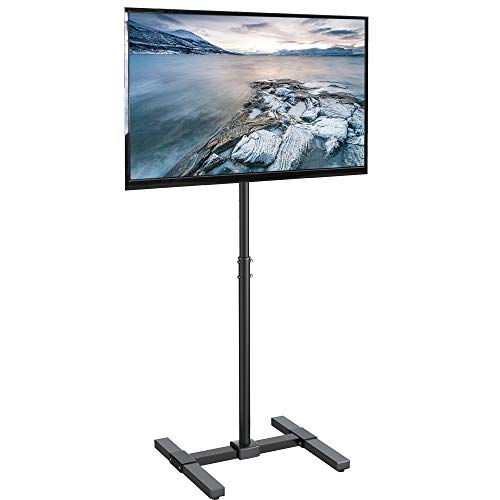
VIVO Height Adjustable TV Floor Stand for 13-50 in Screens | Adjustable TV Stand, LCD LED OLED 4K Smart Flat & Curved Monitor Panels, Max VESA 200x200, Holds 44 lbs, Black, STAND-TV07
Check price on Amazon
VIVO TV Stand with Storage Shelf for 55-100 in Screens | Heavy Duty, Freestanding TV Mount for Ultra Large Flat & Curved Panels, Max VESA 800x600, Holds 154 lbs, Black, STAND-TV100F
Check price on AmazonFrequently Asked Questions
Is a freestanding TV stand safe for a large flat screen?
Yes, provided you choose a stand rated for your TV's weight and width, place it on a level floor, and use the included anti-tip hardware. Larger screens benefit from stands with a wide, low base.
Do I need to anchor a freestanding TV stand to the wall?
It is not strictly required for the stand to function, but anchoring is strongly recommended in homes with children, pets, or in earthquake-prone areas. Most modern stands include an anti-tip strap.
Can I put a soundbar on a freestanding TV stand?
Most stands with a top shelf or open lower shelf can accommodate a soundbar. Check the shelf depth and height clearance before buying if you have a large soundbar.
What is the ideal height for a freestanding TV stand?
For a typical sofa, a stand height of 20 to 26 inches places the center of the screen near seated eye level. Lower stands are generally more comfortable for larger TVs.
Freestanding or wall-mounted — which is better?
Freestanding is better for renters, flexible layouts, and anyone wanting storage and easy cable management. Wall-mounted saves floor space and offers a cleaner look but requires drilling and structural anchoring. Many people combine both by using a freestanding stand and a separate wall mount for the TV itself.
Final Thoughts
A freestanding TV stand for flat screens is one of the most practical furniture purchases you can make. It protects your television, hides your cables, adds storage, and can be moved or replaced without leaving a single hole in the wall. Focus on the three fundamentals — correct size, adequate weight capacity, and a stable base — and then let style guide the rest.
If you are ready to start comparing models, browse the recommendations above for the strongest freestanding options available right now. For readers still exploring layout possibilities, our related guides on modern TV cabinet designs for living room and wooden TV cabinet designs for living room offer further inspiration.