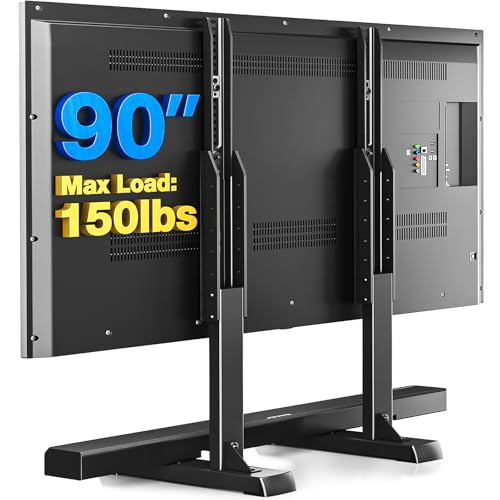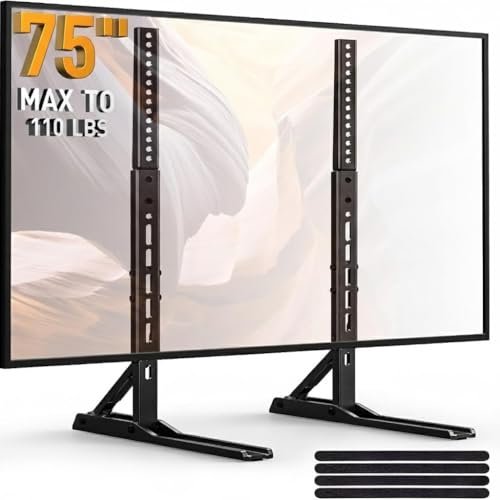
Why Choose a Tabletop TV Stand for Your 75-Inch TV?
When you've invested in a stunning 75-inch television, you want to display it perfectly. While wall mounting is a popular option, it's not always feasible or desired. A tabletop TV stand for a 75-inch TV offers a fantastic alternative. It provides a secure, freestanding base that sits on your existing furniture, like a media console or a sturdy dresser. This setup is ideal for renters who can't drill into walls, for rooms where the TV placement might change, or simply for those who prefer the look of a TV standing on a piece of furniture.
Unlike the standard legs that come in the box, a dedicated tabletop stand is engineered to handle the significant weight and width of a 75-inch screen. It replaces the factory feet with a wider, more stable base, often made from heavy-duty steel or aluminum. This not only improves safety but also elevates your TV, allowing you to place a soundbar directly underneath. For those considering other placement options, understanding how a tabletop stand compares to a full TV stand for an 85-inch flat screen can help you make a more informed decision for your space.
Key Factors to Consider Before Buying
Buying a tabletop stand for a large TV isn't a one-size-fits-all purchase. You need to consider several critical factors to ensure your TV is safe and looks great.
1. Weight Capacity and Stability
This is the most important factor. A 75-inch TV can weigh anywhere from 50 to over 80 pounds without the stand. Your tabletop stand must be rated to support this weight and more. Look for stands made from thick, heavy-gauge steel. The base should be wide enough to distribute the weight evenly and prevent tipping. A wobbly stand is a disaster waiting to happen. If you're also considering a wall mount, you'll need to check the weight capacity of a mount for mounting a 75-inch TV on the wall, which is just as crucial.
2. VESA Compatibility
VESA (Video Electronics Standards Association) defines the mounting hole pattern on the back of your TV. A 75-inch TV typically has a VESA pattern of 400x400, 600x400, or even 800x400. Your tabletop stand must be compatible with your TV's specific VESA pattern. Almost all modern stands are adjustable to fit a range of patterns, but it's essential to double-check the specifications of both your TV and the stand before purchasing.
3. Height Adjustment and Tilt
Many tabletop stands offer height adjustment. This is a great feature that allows you to fine-tune your viewing angle and create space for a soundbar. Some models also offer a slight tilt or swivel function. While a swivel might be less critical for a large TV, a height-adjustable stand gives you flexibility in your setup. If you need more dynamic viewing angles, a full motion mount for a 65-inch TV might be a better choice for a smaller screen, but for a 75-inch, a stable tabletop stand is often preferred.
Quick Spec Checklist:
- Weight Capacity: Ensure it supports at least 1.5x your TV's weight.
- VESA Pattern: Confirm compatibility (e.g., 400x400, 600x400).
- Base Width: Must be wide enough for stability on your furniture.
- Material: Heavy-duty steel is the gold standard.
- Adjustability: Look for height adjustment for soundbar placement.
Tabletop Stand vs. Full TV Stand: What's the Difference?
It's easy to confuse a tabletop TV stand with a full-fledged TV stand. A tabletop stand is a minimalist base that replaces the TV's original legs; it does not have shelves or storage. A full TV stand, like a TV stand with storage for a living room, is a piece of furniture that the TV sits on. If you need a complete furniture solution, a rustic TV stand for a 75-inch TV or a metal TV stand for a 75-inch TV might be more appropriate. However, if you already have a beautiful console table or want to put your TV on top of a dresser in the bedroom, a tabletop stand is the perfect accessory.
Installation Tips for a 75-Inch TV
Installing a tabletop stand on a large TV is a two-person job. Always have a helper to lift and position the TV. Before you start, lay down a soft, clean blanket on a flat surface to protect the screen. Attach the stand's brackets to the back of the TV first, then carefully lift the TV onto the stand's base. Tighten all screws securely, but be careful not to overtighten. Once installed, check for stability. If you're ever unsure about the security of your setup, consider consulting a professional or using a safety strap, similar to how you'd secure a wall TV mount for a 65-inch TV.
Frequently Asked Questions (FAQ)
Is a tabletop stand safe for a 75-inch TV?
Yes, absolutely, as long as you choose a high-quality stand specifically designed for large TVs. Check the weight and VESA compatibility, and ensure it has a wide, stable base. A well-built stand is just as safe as the original manufacturer's legs, often more so.
Can I use a tabletop stand on a glass-top table?
It's not recommended. The concentrated weight of a 75-inch TV on a small base can crack glass. Always place your tabletop stand on a solid, sturdy surface like a wooden media console or a heavy-duty TV cabinet.
What is the best material for a tabletop TV stand?
Heavy-duty steel is the best material. It offers superior strength and durability compared to plastic or thin aluminum, which can bend under the weight of a large TV.
How do I know which VESA size my TV needs?
You can find your TV's VESA pattern by measuring the horizontal and vertical distance between the four mounting holes on the back of the TV. The pattern is expressed as width x height in millimeters (e.g., 400x400).