
TV Stand for Bedroom: The Complete Buying & Design Guide
Everything you need to choose the right bedroom TV stand — correct sizing, safe placement, smart storage, and styling ideas for small, medium, and large bedrooms. Research with confidence before you buy.
START THE GUIDEWhy this guide exists: A bedroom TV stand is not just a smaller version of a living room unit. Viewing angles from a bed, tight floor space, cable management behind a headboard, and safety around children and pets all change what "the right stand" means. This guide walks you through each decision so you can buy once and buy right.
Recommended TV Stand for Bedroom
⚠️ AFFILIATE DISCLOSURE: This website contains affiliate links. As an affiliate Associate, we earn from qualifying purchases. If you make a purchase through these links, we may receive a small commission at no additional cost to you. Read our full affiliate policy.

JARHETUN TV Stand with LED Lights, Entertainment Center with Open Shelves and Fabric Drawer, Media Console for 55 Inch TV, Television Stands for Living Room, Bedroom, Black
Check price on Amazon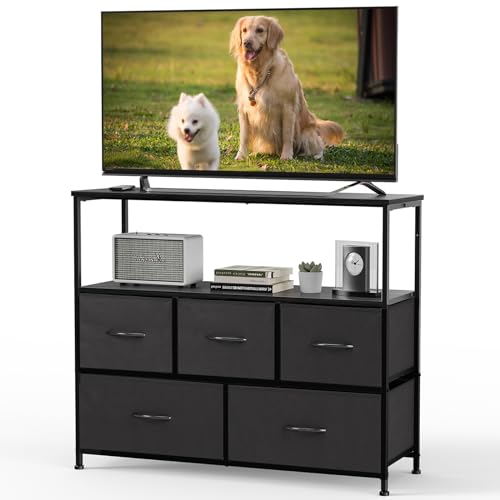
DUMOS TV Stand Dresser, Media Console with Storage Drawers, TV Table | 5 Fabric Open Shelf, Compact Entertainment Unit for Bedroom, Living Space, Dorm Organization, Ivory
Check price on Amazon
Furologee TV Stand, Entertainment Center with Open Shelves, Rustic Brown | TV Table with Storage Shelves, 4 Hooks, TV Console Up for 55 Inch TVs, TV Stands for Living Room, Bedroom
Check price on Amazon
PERLESMITH Rolling TV Stand, Mobile TV Stands for 23-65 Inch LCD LED TVs, Tilt TV Stand Wheels Holds up to 88Lbs, Portable Outdoor TV Cart for Bedroom with Shelf, Max VESA 400x400mm PSTVMC06
Check price on Amazon
Rfiver Mobile TV Stand for 23-65 Inch Flat/Curved TVs up to 88 lbs Black | Rolling TV Stand with Adjustable Shelf & Tilt, Portable Floor Stand on Wheels for Bedroom, Living Room, Max VESA 400x400mm
Check price on Amazon
SONGMICS Dresser with App-Controlled LED Lights, 5 Fabric Drawers Dresser | Chest of Drawers with Open Shelf & Charging Station, TV Stand for Bedroom, Cloud White, BELLAH Collection ULGS723WH05S
Check price on Amazon
Perlegear Universal Swivel TV Stand Base for 32–70 inch TVs to 99lbs | 8-Level Height Adjustable, Tempered Glass Base, Tilt, Max VESA 400x400mm, TV Stand Mount for Living Room & Bedroom, PGTVS26
Check price on Amazon
Rfiver Swivel Floor TV Stand with Power Outlet for 32-65 in TVs | Height Adjustable Tall TV Stand with Wood Base, Holds up to 88 lbs, Space-saving for Bedroom, Living room, Corner, Black
Check price on AmazonWhy a Bedroom TV Stand Needs Different Rules
In a living room, the TV is usually the anchor of a shared space and the stand is chosen to match a sofa, a coffee table, and a rug. In a bedroom, the priorities shift dramatically. The viewing position is almost always a bed — meaning you are often reclining, sitting up, or watching from an angle. The room is smaller, so every inch of floor space matters. And the stand sits in a space associated with rest, which makes clutter, cable tangles, and harsh lighting far more noticeable than they would be in a busy living room.
That is why the best bedroom TV stand is rarely the biggest or the most feature-packed model. It is the one that fits your wall, supports your screen safely, keeps cables hidden, and does not fight with the calm of the room. Before you look at any product, it helps to understand how a bedroom layout differs from a living room. If you are still deciding on the broader room concept, our TV wall design guide and media wall ideas give useful context for how a screen should sit within a wall composition.
Step 1 — Match the Stand to Your TV Size
The single most common mistake buyers make is choosing a stand that is narrower than the TV. Not only does this look unstable, it also increases the risk of tipping — a serious concern in a bedroom where the TV may be near a bed, a walkway, or a child's reach. As a general rule, your stand should be at least as wide as your TV and ideally 10–20% wider for visual balance.
| TV Screen Size | Minimum Stand Width | Ideal Stand Width | Typical Stand Price Range |
|---|---|---|---|
| 32 inches | 36 inches | 40–44 inches | $80–$250 |
| 43 inches | 44 inches | 48–55 inches | $120–$400 |
| 50 inches | 48 inches | 52–58 inches | $150–$500 |
| 55 inches | 52 inches | 58–65 inches | $200–$700 |
| 65 inches | 60 inches | 65–75 inches | $300–$1,200 |
| 75 inches and above | 68 inches | 75–90 inches | $500–$2,500 |
These figures are based on current market pricing for mainstream and mid-premium bedroom furniture. A compact 43-inch setup can be done comfortably under $400, while a large 65-inch bedroom media console with storage and a fireplace insert will typically start around $600 and climb well past $1,200 for solid wood or designer models. If your bedroom is on the larger side and you are considering a 65-inch screen, our guide to a tall TV console for a 65-inch TV explains how height changes the equation, while TV console size for a 65-inch TV breaks down width options in more detail.
Step 2 — Choose the Right Style for a Bedroom
Bedroom furniture generally favors softer, calmer aesthetics than living room pieces, but the functional differences between styles matter just as much as the look. Here is how the main options compare when used specifically in a bedroom.
Corner TV Stands
Best for small bedrooms. Uses dead corner space, keeps the center of the room open, and often includes concealed storage. A swivel top lets you angle the screen toward the bed without moving the unit.
Floating & Wall-Mounted Units
Ideal when floor space is tight or you want a minimalist look. Frees the floor for cleaning and storage, and lets you set the exact viewing height. Requires wall anchoring into studs.
Low-Profile Consoles
A clean, modern choice for bedrooms with a wall-mounted TV or a bed positioned low. Keeps sightlines open and makes a small room feel larger.
Tall Media Cabinets
Adds vertical storage for clothes, linens, or media without taking more floor space. A good fit for guest rooms and bedrooms that double as a study.
Fireplace TV Stands
Adds warmth and ambiance, especially in cooler rooms. Electric models are plug-in and renter-friendly. Best placed away from the bed's direct footpath.
Storage Benches & Ottomans
Dual-purpose pieces that hold blankets or media while doubling as seating. A smart pick for very small bedrooms where every item must earn its place.
If your bedroom is genuinely tight, a corner solution is usually the most efficient. Our corner TV stand for a 65-inch TV guide shows how much floor space a corner unit actually saves compared to a flat-wall console, and modern corner TV stand for a 55-inch TV covers the mid-size options. For a softer, more traditional bedroom, a rustic corner TV stand for a 65-inch TV can blend with wooden bed frames and warm textiles.
Step 3 — Get the Height and Viewing Angle Right
Bedroom viewing is different from sofa viewing because your eye level changes depending on whether you are sitting up, reclining, or lying down. The most comfortable setup places the center of the screen at or slightly below your eye level when you are sitting up in bed. For a typical bed with a mattress top around 24–28 inches, a stand between 20 and 30 inches tall usually works well.
If you watch primarily while lying down, a slightly higher screen position can reduce neck strain — but avoid mounting the TV so high that you have to tilt your head back. A useful rule is to keep the bottom of the screen at least 6–10 inches above the top of the mattress so your feet do not block the picture when you are stretched out.
For wall-mounted setups, an articulating or full-motion mount is often worth the extra cost because it lets you angle the screen toward wherever you are sitting. Our 55-inch TV wall mount full motion guide and wall mount for a 55-inch TV article explain the trade-offs, and TV wall mount with extra long extension arm covers situations where the bed is far from the wall. If you prefer a ceiling-based solution in a very small room, a motorized retractable TV ceiling mount can fold the screen away entirely when not in use.
Step 4 — Plan Storage Around Bedroom Habits
In a living room, media storage is mostly about DVDs, game consoles, and remotes. In a bedroom, storage often needs to do double duty: hold a cable box, hide charging cables, store extra bedding, or keep a book and a lamp within reach. Before buying, list what you actually need to store on or inside the stand, then match that list to the unit's shelves and drawers.
Bedroom TV Stand Storage Checklist
- Is there an open shelf for a cable box, streaming stick, or game console with good airflow?
- Are there drawers or closed cabinets to hide remotes, chargers, and cables?
- Is there a cable management cutout or channel at the back?
- Can the top surface hold a lamp, a clock, or a small plant without crowding the TV?
- If you use a soundbar, is there a dedicated shelf or enough top-surface depth?
- Are the drawers soft-close, so they do not wake a sleeping partner?
If storage is your main concern, a TV stand with storage format — even one marketed for living rooms — can work beautifully in a bedroom as long as the dimensions fit. Add storage bins for an entertainment center to keep smaller items organized, and consider a storage ottoman at the foot of the bed for blankets and pillows that would otherwise clutter the room.
Step 5 — Safety First: Anchoring, Cables, and Placement
A bedroom TV stand carries risks that a living room unit often does not: it may be within reach of a child jumping on a bed, a pet running past, or an adult who loses balance in the dark. Taking a few safety steps is not optional.
- Anchor the stand and TV. Use anti-tip straps or a wall anchor kit rated for the combined weight of the stand and TV. This is the single most effective way to prevent tip-over accidents.
- Respect the weight rating. Never exceed the manufacturer's maximum load. If your TV is close to the limit, choose a heavier-duty stand.
- Manage cables. Route cables through a raceway or cable sleeve so they cannot be pulled. Keep power cords away from walkways and out of reach of pets and toddlers.
- Leave ventilation space. Do not push the stand flush against a wall if it has rear ventilation slots. Leave 2–3 inches for airflow.
- Avoid blocking exits. Never place a stand where it obstructs a door, window, or emergency path.
- Protect the surface. Use felt pads or a TV stand protector to prevent scratches, especially on wood floors.
- Watch out for sunlight. Direct sun can fade wood finishes and damage screens over time. Our sun damage prevention guide explains simple fixes.
Step 6 — Small Bedroom? Here Is What Actually Works
Small bedrooms are the hardest case, because the TV, the bed, the wardrobe, and the walkway all compete for the same floor. The best solutions in small rooms share three traits: they use vertical or corner space, they hide clutter, and they do not block circulation.
A corner stand is usually the first recommendation, followed by a wall-mounted or floating unit with a slim console beneath it. If you go the floating route, our wall-mounted floating entertainment center guide and floating wall TV entertainment center article cover load ratings and installation. For a compact footprint with a bit of luxury, a small corner electric fireplace for bedroom adds ambiance without eating floor space, and a bedroom set with entertainment center is worth considering if you are furnishing the whole room at once.
When space is genuinely limited, a narrow console can sit under a wall-mounted TV and double as a bedside surface. Our table to put under a wall-mounted TV piece covers exactly this setup. If you need somewhere to set a lamp or a book beside the bed, a sofa table or a slim accent chair can round out the layout without adding bulk.
Step 7 — Style the Stand So It Belongs in a Bedroom
A bedroom TV stand should feel like part of the room, not a piece of office equipment. A few simple styling decisions make a large difference:
- Keep the top surface light. One lamp, one small plant, and a single decorative object is usually enough. Crowding the surface makes a small room feel smaller.
- Choose warm, dimmable lighting. A dimmable floor lamp beside the stand lets you lower the light for evening viewing without harsh glare.
- Hide the tech. If you dislike seeing a cable box or console, look for a stand with doors, or choose an entertainment center with doors to hide the TV.
- Match the finish to the bed. A black stand pairs well with dark metal bed frames, while a wood TV stand for a 55-inch TV suits warm wooden furniture.
- Consider a fireplace insert for ambiance. A realistic electric fireplace TV stand or a mid-century modern fireplace TV stand adds a soft glow that works especially well in bedrooms.
- Use a rug to define the zone. If the bed and TV share an open area, a rug can visually separate the viewing spot. Our area rugs guide covers sizing.
Step 8 — Set a Realistic Budget
Bedroom TV stands span a very wide price range depending on material, size, and features. Here is what you can expect to pay in the current market:
| Category | Typical Price | What You Get |
|---|---|---|
| Budget / Compact | $80–$250 | Particle board or metal frame, 32–43 inch TVs, minimal storage |
| Mid-Range | $250–$700 | Better materials, 43–55 inch TVs, drawers or open shelving, cable management |
| Premium | $700–$1,500 | Solid wood or high-grade veneer, 55–65 inch TVs, soft-close drawers, fireplace options |
| Luxury / Large Format | $1,500–$2,500+ | 65–85 inch TVs, full media walls, integrated fireplace, designer finishes |
If you are furnishing a guest bedroom, a mid-range corner unit is often the sweet spot. If the bedroom is a primary suite and the TV is part of a larger wall composition, investing in a premium media wall may be justified. Our splurge vs save guide and TV stand on a budget article can help you decide where to draw the line.
Common Mistakes to Avoid in a Bedroom TV Setup
- Buying a stand narrower than the TV. It looks unstable and increases tip-over risk.
- Mounting the TV too high. Bedroom viewing is often reclined; a high screen causes neck strain.
- Ignoring cable management. Loose cables look messy, attract pets, and create tripping hazards.
- Forgetting the swivel. In a bedroom, the ability to angle the screen toward the bed is often more valuable than extra storage.
- Choosing open shelving only. Closed storage hides clutter and keeps the room calm.
- Skipping the anchor. Even a sturdy stand should be anchored if children or pets use the room.
- Overlooking heat. Electronics in a closed cabinet need airflow; check for ventilation slots or open backs.
Frequently Asked Questions
What size TV stand do I need for a bedroom?
Your stand should be at least as wide as your TV and ideally 10–20% wider. For a 43-inch TV, aim for 48–55 inches. For a 55-inch TV, aim for 58–65 inches. For a 65-inch TV, aim for 65–75 inches. Always measure your available wall space first and leave a few inches on each side.
Is it safe to put a TV in the bedroom?
Yes, when properly installed. Use a stand rated for your TV's weight, anchor the stand or TV to the wall, keep cables organized and out of reach, and maintain a comfortable viewing distance of roughly 1.5–2.5 times the screen size. Never place a stand where it blocks an exit.
What is the best height for a bedroom TV stand?
The center of the screen should sit at or slightly below eye level when you are sitting up in bed. For most beds, a stand between 20 and 30 inches tall works well. If you watch lying down, you may prefer a slightly higher position, but avoid mounting so high that you tilt your head back.
Can I use a corner TV stand in a small bedroom?
Yes — corner stands are one of the best solutions for small bedrooms. They use otherwise wasted corner space, keep the room's center open, and often include hidden storage. A swivel top lets you angle the screen toward the bed without moving the unit.
Should I wall mount or use a TV stand in my bedroom?
It depends on your space and needs. A TV stand offers storage, easy cable management, and no wall damage — ideal for renters. A wall mount saves floor space and lets you set the perfect height. Many bedrooms combine both: a slim console beneath a wall-mounted TV.
How far should the TV be from the bed?
A comfortable viewing distance is roughly 1.5 to 2.5 times the screen size measured diagonally. For a 43-inch TV, about 5.5–9 feet works well. For a 55-inch TV, about 7–11 feet. For a 65-inch TV, about 8–13 feet. In a typical bedroom, a 43–55 inch screen is usually the most comfortable.
Final Thoughts
Choosing a TV stand for a bedroom comes down to four things: the right width for your screen, a height that matches how you sit or lie in bed, storage that fits your habits, and safety measures that protect everyone in the room. Get those right and the stand becomes an invisible, reliable part of the room rather than a problem you notice every night.
Use the recommended products above as a starting point, compare the sizing table against your own TV, and read the safety checklist before you buy. With a little planning, your bedroom TV setup can be comfortable, organized, and genuinely restful — which is exactly what a bedroom should be.