
Entertainment Center for Stereo Equipment
Discover how to choose the perfect entertainment center for your turntable, amplifier, receiver, and speakers. Learn about shelving, ventilation, cable management, and styling for the ultimate hi-fi experience.
START READINGWhy This Matters: A standard TV stand is not designed for the unique needs of high-fidelity audio equipment. Proper ventilation, weight distribution, and vibration isolation are critical to protecting your investment and getting the best sound quality. This guide will walk you through everything you need to know.
Recommended Entertainment Centers for Stereo Equipment
⚠️ AFFILIATE DISCLOSURE: This website contains affiliate links. As an affiliate Associate, we earn from qualifying purchases. If you make a purchase through these links, we may receive a small commission at no additional cost to you. Read our full affiliate policy.

Armocity AV Media Stand, Stereo Stands and Racks Small Entertainment Center | Corner Shelf Stand with Power Strip & LED Lights, Audio Tower HIFI Rack Stereo Shelf CRT TV Stand, 4 Tier, Rustic Brown
Check price on Amazon
Aquzee Game Console Shelf, 4-Tier Video Gaming Consoles Stand | With Outlet & RGB Light, Small Media Entertainment Center, Audio Stereo Storage Organizer, Playroom Furniture, Stereo Stands
Check price on Amazon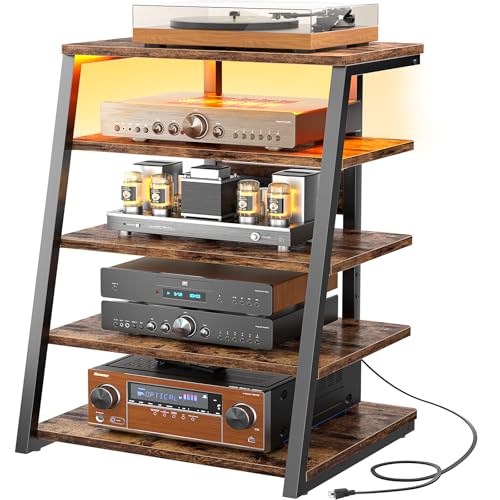
Armocity AV Media Stand, Stereo Stands and Racks Small Entertainment Center | Corner Shelf Stand with Power Strip & LED Lights, Audio Tower HIFI Rack Stereo Shelf CRT TV Stand, 5Tier, Rustic Brown
Check price on Amazon
Armocity AV Media Stand, Stereo Stands and Racks Small Entertainment Center | Corner Shelf Stand with Power Strip & LED Lights, Audio Tower HIFI Rack Stereo Shelf CRT TV Stand, 5 Tier, Black Walnut
Check price on Amazon
Armocity AV Media Stand, Stereo Stands and Racks Small Entertainment Center | Corner Shelf Stand with Power Strip & LED Lights, Audio Tower HIFI Rack Stereo Shelf CRT TV Stand, 4 Tier, Black Walnut
Check price on Amazon
Armocity AV Media Stand, Stereo Stands and Racks Small Entertainment Center | Corner Shelf Stand with Power Strip & LED Lights, Audio Tower HIFI Rack Stereo Shelf CRT TV Stand, 5 Tier, Black Walnut
Check price on Amazon
HOOBRO Game Console Shelf, 4-Tier Video Gaming Consoles Stand with Outlet & RGB Light, Audio Rack Tower for Turntable, Stereo Equipment, Wooden Entertainment Storage Stand, Black BB38UDCJ01
Check price on Amazon
LELELINKY 3-Tier AV Media Player Stand, Brown Stereo Cabinet, Modern Stereo Cabine,Game Console Shelf,Wooden TV Stand,Multifunctional Entertainment Center, Suitable for Home, Conference Room
Check price on AmazonWhy Your Stereo System Deserves Its Own Entertainment Center
Investing in high-quality audio equipment is just the first step. The furniture you place it on plays a significant role in both the longevity of your components and the quality of sound you experience. Unlike a basic TV entertainment center, a cabinet designed for stereo equipment addresses specific challenges: heat dissipation, vibration control, and organized cable management.
A dedicated entertainment center for stereo equipment is not just about aesthetics—it's about performance. Amplifiers and receivers generate considerable heat, and enclosing them in a poorly ventilated cabinet can lead to overheating, reduced lifespan, and even safety hazards. Similarly, vibrations from speakers and the floor can affect the delicate mechanics of a turntable, introducing unwanted noise and distortion.
Key Takeaways
- Ventilation is critical: Your amplifier needs open space or active cooling to prevent overheating.
- Weight capacity matters: A single high-end amplifier can weigh 50+ pounds, so ensure your shelves can handle the load.
- Vibration isolation: A solid, well-damped cabinet protects turntables and improves sound clarity.
- Adjustable shelving: Different components have different heights. Adjustable shelves provide flexibility.
- Cable management: A clutter-free setup is safer and easier to maintain.
Types of Entertainment Centers for Stereo Systems
There is no one-size-fits-all solution. The best entertainment center for your stereo equipment depends on the size of your components, the size of your room, and your personal style. Here are the most common options:
1. Open-Frame Audio Racks
Open-frame racks are the preferred choice for audiophiles. They offer maximum ventilation, easy access to cables, and often feature adjustable spikes or feet for leveling. These racks are typically made from metal and wood and are designed specifically for hi-fi components. They are minimalist in design and keep the focus on the equipment itself.
2. Media Consoles with Open Shelving
A media console with open shelving is a versatile option that blends style with function. It provides adequate airflow while still offering a furniture-like appearance that complements your living room decor. Look for models with a sturdy back panel or none at all to ensure proper ventilation. A living room furniture entertainment center in this style can be a great anchor for your audio setup.
3. Closed Cabinets with Ventilation
If you prefer a cleaner, more enclosed look, choose a cabinet with built-in ventilation features such as slatted doors, mesh panels, or cutouts in the back. Some high-end cabinets include quiet cooling fans to actively manage heat. This option is ideal for keeping dust off your equipment and hiding cable clutter, but it requires careful attention to airflow. A well-designed entertainment center with lots of storage can incorporate these features.
4. Wall-Mounted Floating Consoles
For a modern, space-saving solution, a floating entertainment center with storage can be an excellent choice. Mounted securely to the wall, these consoles free up floor space and can be positioned at an optimal height for accessing your equipment. Ensure the wall mount is rated for the combined weight of the console and your stereo gear. A floating TV stand with electric fireplace can also incorporate shelving for audio components.
Essential Features to Look For
Ventilation and Airflow
This is the single most important factor. Heat is the enemy of electronics. Your entertainment center must allow for passive or active airflow around your amplifier, receiver, and other heat-generating components.
- Open-back design: Allows hot air to escape naturally.
- Slatted or perforated doors: Provides airflow while keeping components hidden.
- Built-in fans: Some cabinets include quiet fans to actively pull heat out.
- Clearance: Leave at least 2-3 inches of space above and around each component.
Weight Capacity and Shelf Strength
Stereo equipment is heavy. A typical power amplifier can weigh between 30 and 80 pounds. A turntable might weigh 20-30 pounds. Your shelves must be able to support this weight without sagging or warping over time. Look for cabinets made from solid wood or high-quality engineered wood with a thick profile. Check the manufacturer's weight specifications carefully.
Adjustable Shelving
Components come in all shapes and sizes. A tall tube amplifier may need 10 inches of vertical space, while a slim DAC might only need 3 inches. Adjustable shelves allow you to customize the layout to fit your specific equipment, maximizing both space and airflow. This is a feature commonly found in a entertainment center with display shelves.
Vibration Control and Isolation
Vibrations can degrade sound quality, especially for turntables and tube amplifiers. A good entertainment center should be rigid and heavy to minimize resonance. Some high-end racks use spikes or isolation feet to decouple the rack from the floor. You can also add aftermarket isolation pads or platforms under individual components for further improvement.
Cable Management
A tangle of cables is not only unsightly but can also be a safety hazard. Look for entertainment centers with built-in cable management features such as grommets, channels, or Velcro straps. A clean setup is easier to troubleshoot and upgrade. For a truly organized system, consider a cabinet with a dedicated dresser drawer or a hidden compartment for excess cable.
Stereo Equipment Entertainment Center Comparison
| Feature | Open-Frame Rack | Media Console (Open) | Closed Cabinet | Floating Console |
|---|---|---|---|---|
| Ventilation | Excellent | Very Good | Fair (needs vents/fans) | Good |
| Vibration Control | Excellent | Good | Good | Very Good (wall-mounted) |
| Aesthetics | Industrial/Functional | Furniture-like | Clean/Enclosed | Modern/Minimalist |
| Weight Capacity | High | Medium-High | Medium-High | Medium (depends on mount) |
| Cable Management | Excellent (open) | Good | Good (hidden) | Good (can be hidden) |
| Price Range | $200–$1,500 | $300–$2,000 | $400–$3,000 | $250–$1,800 |
| Best For | Audiophiles, upgraders | Living rooms, mixed use | Dust-free environments | Small spaces, modern homes |
How to Position Your Stereo Equipment
Where you place your components within the entertainment center matters. Here are some best practices:
- Amplifier/Receiver: Place on the bottom shelf or a dedicated shelf with maximum ventilation. Heat rises, so the bottom is often the coolest spot.
- Turntable: Place on the top shelf or a dedicated, level surface. It should be as far away from speakers as possible to minimize vibration feedback. A dedicated turntable shelf can be a great solution.
- CD Player/DAC/Streamer: These can be placed on middle shelves. Ensure easy access to the disc tray or controls.
- Cable Box/Power Conditioner: Place on the bottom shelf or even on the floor behind the cabinet to keep power cables away from signal cables.
- Speakers: Speakers generally should not be placed inside the entertainment center, as this can cause resonance and muddy the sound. Place them on dedicated stands or on the floor beside the cabinet.
Styling Your Stereo Entertainment Center
Your entertainment center is a focal point of your living room. Here are some tips to make it look as good as it sounds:
- Keep it minimal: Avoid cluttering the space around your components. Let the equipment be the star.
- Add subtle lighting: A modern black floor lamp or a small LED strip behind the cabinet can create a warm, inviting ambiance.
- Display vinyl records: If you have a turntable, store your favorite records in a stylish way. A few albums displayed on a shelf can add a personal touch.
- Use decorative accents: A small plant, a piece of art, or a decorative object can break up the visual weight of the electronics. Just ensure it doesn't block ventilation.
- Coordinate with your living room: Choose an entertainment center that complements your existing decor. A living room set with entertainment center can create a cohesive look.
Pros and Cons of Different Materials
Solid Wood
- Excellent vibration damping
- Durable and long-lasting
- Timeless aesthetic
- Can be sanded and refinished
Solid Wood
- Expensive
- Heavy and difficult to move
- Can be susceptible to humidity changes
Metal & Glass
- Modern, sleek look
- Excellent ventilation (open designs)
- Often more affordable
- Easy to clean
Metal & Glass
- Glass can transmit vibrations
- Metal can resonate if not damped
- Glass requires careful cleaning
Frequently Asked Questions
You can, but it's not ideal. Regular TV stands often lack proper ventilation, may not support the weight of heavy amplifiers, and are not designed to minimize vibration. For a high-performance stereo system, a dedicated entertainment center or audio rack is a much better investment.
As a general rule, leave at least 2-3 inches of clearance above your amplifier. If the amplifier has vents on the top, this is especially important. Some high-power amplifiers may require even more space or active cooling.
Solid wood is generally considered the best for vibration damping and durability. However, high-quality MDF (medium-density fiberboard) with a wood veneer can also perform well. Metal and glass can work if designed with isolation in mind.
Ideally, no. Placing speakers on the same surface as your turntable can cause vibrations that degrade sound quality. It's best to place speakers on dedicated stands or on the floor beside the entertainment center.
Use cable management accessories like zip ties, Velcro straps, and cable sleeves. Many entertainment centers have built-in grommets or channels. You can also mount a cable management box or raceway to the back of the cabinet.
Prices vary widely. A basic open-frame rack starts around $200. A high-quality solid wood media console can range from $500 to $2,500. Custom-built cabinets can cost $3,000 or more. For most enthusiasts, a budget of $500–$1,500 will provide an excellent balance of quality and features.
Conclusion
Choosing the right entertainment center for your stereo equipment is a crucial decision that impacts both the performance and longevity of your audio system. By prioritizing ventilation, weight capacity, vibration control, and cable management, you can create a setup that not only sounds incredible but also looks great in your living space.
Whether you opt for an open-frame rack, a stylish media console, or a space-saving floating design, the key is to match the furniture to your specific components and listening habits. Take the time to measure your equipment, consider your room layout, and invest in a quality piece that will serve you for years to come.
Ready to find the perfect entertainment center for your stereo system? Explore our recommended products above and take the first step towards a better listening experience today.
Ready to Upgrade Your Stereo Setup?
Browse our curated selection of entertainment centers designed specifically for audio equipment. Find the perfect blend of form and function for your home.
VIEW RECOMMENDED PRODUCTS