Modern Freestanding Wood Burning Fireplace: The Complete Buying Guide
Everything you need to know before investing in a contemporary freestanding wood stove — from sizing and efficiency to installation, styling, and the best models for your home.
Why a Modern Freestanding Wood Burning Fireplace? Unlike traditional built-in masonry fireplaces, a modern freestanding wood burning fireplace offers exceptional heating efficiency, striking sculptural presence, and installation flexibility. Whether you're looking to reduce energy costs, add a design focal point to your living room, or create a cozy atmosphere that only real wood fire can provide, a contemporary freestanding stove delivers on all fronts. This guide walks you through every decision point so you can buy with confidence.
What Is a Modern Freestanding Wood Burning Fireplace?
A modern freestanding wood burning fireplace is a self-contained heating appliance that stands independently in your room rather than being recessed into a wall. It combines a firebox, combustion system, and often a built-in heat exchanger into a single sculptural unit. Contemporary models feature clean geometric lines, large ceramic glass viewing windows, and materials like powder-coated steel, cast iron, and soapstone.
Unlike traditional open fireplaces, these units are engineered for real heat production. They use advanced combustion technology — including secondary burn tubes and catalytic converters — to extract far more heat from every log while producing minimal smoke. Many are EPA-certified and qualify for federal tax credits. If you're comparing options for a larger living space, you may also want to explore our guide to freestanding wood burning fireplaces for indoor use to understand how these units differ from other heating solutions.
Why Choose a Freestanding Model Over Built-In?
Freestanding wood burning fireplaces offer several distinct advantages over built-in masonry or zero-clearance units:
- Superior heating efficiency: Freestanding stoves radiate heat in all directions, warming the room faster and more evenly than a built-in fireplace that loses much of its heat up the chimney.
- Installation flexibility: You can place a freestanding stove in nearly any room with adequate clearance and venting, including basements, bedrooms, and sunrooms.
- Design impact: A freestanding stove acts as a piece of functional sculpture. It doesn't require a massive masonry surround, making it ideal for modern and minimalist interiors.
- Lower construction cost: Without the need for a full masonry chimney and hearth, freestanding installation is often more affordable — though professional venting is still required.
For homeowners designing an entertainment-focused living room, a freestanding stove can be integrated alongside media furniture. Our living room layout guide with fireplace and TV shows how to arrange both without visual conflict.
Modern Styles and Design Options
Today's freestanding wood burning fireplaces come in a range of aesthetics to match any interior:
Contemporary Cylindrical Stoves
These feature a vertical, tube-like firebox with a wrap-around glass window that showcases the fire from multiple angles. They're ideal for tight spaces and modern apartments.
Minimalist Rectangular Stoves
Clean box shapes with large front glass panels and hidden hinges. These suit Scandinavian, minimalist, and industrial interiors where understated design is key.
Pedestal and Legged Models
Some modern designs elevate the firebox on a single pedestal or slim legs, creating an airy, floating appearance that keeps floor space visually open.
Wall-Mounted and Corner Options
Compact freestanding stoves can be positioned in corners or against walls with proper clearance. If you're working with a corner layout, our corner TV cabinet design ideas may help you coordinate the surrounding furniture.
Soapstone and Stone-Clad Stoves
These combine modern lines with natural stone cladding that radiates heat long after the fire dies down — perfect for homeowners who want both style and thermal mass.
Sizing and Heat Output: Getting It Right
Choosing the wrong size is the most common mistake buyers make. An oversized stove will overheat the room and force you to run it inefficiently at low burn. An undersized stove won't keep you warm on cold nights.
Quick Sizing Rule of Thumb
- Well-insulated modern home: 1 kW per 14–16 m² (or roughly 1 BTU per 10 sq ft)
- Average insulation: 1 kW per 10–12 m²
- Poorly insulated or older home: 1 kW per 6–8 m²
Typical Output Ranges
- Small rooms (up to 500 sq ft): 20,000–35,000 BTU — $800–$1,500
- Medium rooms (500–1,200 sq ft): 35,000–60,000 BTU — $1,200–$2,500
- Large rooms (1,200–2,000 sq ft): 60,000–80,000 BTU — $2,000–$3,500
- Whole-home / open concept (2,000+ sq ft): 80,000+ BTU — $2,500–$5,000
Always check the manufacturer's stated heating capacity in square feet or meters, and factor in ceiling height, window area, and insulation quality. A professional hearth dealer can perform a room-by-room heat load calculation if you're unsure.
Efficiency and Emissions Explained
Modern wood burning fireplaces are dramatically cleaner and more efficient than older models. Here's what the numbers mean:
EPA Certification
In the United States, all wood stoves sold must meet EPA emission standards. Current standards limit particulate emissions to 2.0 grams per hour for non-catalytic stoves and 2.5 g/h for catalytic models. Look for the EPA certification label on any stove you consider.
Efficiency Ratings
Higher-efficiency stoves convert more wood into usable heat. Modern freestanding models typically achieve 60–80% efficiency. Key technologies include:
- Secondary combustion: Re-burns smoke and gases inside the firebox for a cleaner, hotter burn.
- Catalytic converters: Use a coated honeycomb to ignite unburned particles at lower temperatures.
- Insulated fireboxes: Keep combustion temperatures high for complete burning.
Tax Credits and Incentives
In the U.S., wood stoves with a thermal efficiency of 75% or higher (HHV) may qualify for federal tax credits. Check current IRS guidelines and local utility rebates before purchasing.
Installation, Venting, and Clearances
Proper installation is critical for safety, performance, and insurance compliance. Never cut corners here.
Chimney and Venting Options
- Class A chimney: The most common solution, running vertically through the roof. Requires a ceiling support box, flashing, and storm collar.
- Direct vent through wall: Some modern stoves allow horizontal venting through an exterior wall, though this can affect draft and performance.
- Existing masonry chimney: Can be used with a stainless steel liner, but the chimney must be inspected and often relined.
Clearances to Combustibles
Every stove has specific clearance requirements to walls, floors, and furniture. These are listed in the owner's manual and on the stove's safety label. Common clearances range from 6 to 36 inches, depending on the stove and whether heat shields are used. A non-combustible hearth pad is almost always required under and in front of the stove.
Professional Installation vs. DIY
While some experienced homeowners tackle installation themselves, we strongly recommend hiring a certified hearth professional. They will ensure proper venting, clearances, and code compliance — and many manufacturers require professional installation to validate the warranty.
Placement and Room Integration
Where you place your freestanding stove affects both its heating performance and its visual impact. Consider these placement strategies:
Central Placement
Placing the stove near the center of an open-plan living area maximizes radiant heat distribution and makes the fire a natural gathering point. This works particularly well in open-concept homes.
Corner Placement
Corners are often underused spaces. A compact freestanding stove can turn a corner into a cozy focal point without dominating the room. Just ensure you meet the corner clearance requirements.
Along a Feature Wall
Pairing a freestanding stove with a feature wall — such as stone veneer, brick, or a dramatic dark paint color — creates a stunning focal point. If you're also planning a TV in the same room, our family room designs with fireplace and TV offer layout inspiration.
Bedroom and Basement Installation
Freestanding stoves are increasingly popular in bedrooms and basements, where they provide supplemental heat and ambiance. Ensure proper venting and clearance in these tighter spaces, and check local codes for bedroom installation restrictions.
Cost Breakdown and Budget Planning
Understanding the full cost picture prevents surprises. Here's a realistic breakdown for a modern freestanding wood burning fireplace installation:
Stove Unit
- Budget models: $800–$1,500
- Mid-range: $1,500–$2,500
- Premium / designer: $2,500–$5,000+
Venting and Chimney System
- Basic through-roof kit: $500–$1,200
- Complex or tall chimney: $1,500–$3,000
- Masonry liner (if using existing chimney): $1,000–$2,500
Installation Labor
- Standard installation: $800–$2,000
- Complex installation (roof work, tall ceilings): $2,000–$4,000+
Hearth Pad and Accessories
- Hearth pad: $150–$600
- Stove tools, gloves, and grate: $100–$300
- Wood storage rack: $100–$400
Total Estimated Project Cost
For a typical mid-range installation, expect a total project cost of $3,000–$8,000. Premium designer stoves with complex installations can exceed $10,000. Always get multiple quotes from certified installers and confirm what's included in each bid.
Maintenance and Long-Term Ownership
A modern wood burning fireplace is a long-term investment. With proper care, a quality stove can last 20–30 years or more.
Routine Maintenance
- Ash removal: Empty the ash pan regularly, leaving a thin layer of ash to insulate the firebox.
- Glass cleaning: Use a specialized stove glass cleaner — never abrasive cleaners that can scratch the ceramic glass.
- Gasket inspection: Check the door rope gasket annually and replace if it's frayed or compressed.
- Chimney sweeping: Have the chimney professionally swept at least once per year, ideally before the heating season.
- Catalytic converter (if equipped): Inspect and clean according to the manufacturer's schedule.
Fuel Quality Matters
Always burn seasoned, dry hardwood with a moisture content below 20%. Wet wood wastes energy, creates creosote, and produces more smoke. Purchase a moisture meter and test your firewood before burning. Hardwoods like oak, maple, and ash offer the best heat output.
Safety Checks
Install carbon monoxide detectors and smoke alarms in the same room as the stove. Keep a fire extinguisher nearby, and never leave a fire unattended. Have your installation inspected annually by a certified chimney sweep.
Recommended Modern Freestanding Wood Burning Fireplaces
⚠️ AFFILIATE DISCLOSURE: This website contains affiliate links. As an affiliate Associate, we earn from qualifying purchases. If you make a purchase through these links, we may receive a small commission at no additional cost to you. Read our full affiliate policy.

Real Flame Black Hollis Electric Fireplace - Freestanding with Remote Control - 6 Flame Colors & 5 Brightness Levels, Black
Check price on Amazon
Modern Ember Harlowe Freestanding Electric Fireplace Stove Heater in Black with Multi-Color Ember Bed | Smart Technology | Alexa/WiFi Enabled | 1500W | Indoor Portable Heater | Safety Shutoff
Check price on Amazon
EXNOS Electric Fireplace Stove Heater with 3D Flame, 1500W &Flame-Only Mode | Space Heater Fireplace, Indoor Use, Freestanding, 12H Timer, Dual Control, Infrared, Thermostat, Tip-over&Overheat Protection
Check price on Amazon
Real Flame Foster 25" Stove Electric Fireplace for Living Room or Bedroom, Realistic Log and Flame Effect, Freestanding Fireplace with Adjustable Thermostat, Auto Shut-Off
Check price on Amazon
duraflame Freestanding Electric Fireplace Stove Heater with 3D Flame Effect for 1,000 Sq. Ft, Bronze
Check price on Amazon
Modern Ember Harlowe Freestanding Electric Fireplace Stove Heater in Hunter Green with Multi-Color Ember Bed | Smart Technology | Alexa/WiFi Enabled | 1500W | Indoor Portable Heater | Safety Shutoff
Check price on Amazon
Sweetcrispy 26" Electric Fireplace Heater, Freestanding Indoor Fireplace | 3D Flame Effect, 5110 BTU, Dual Heat Modes, Remote Control, Timer, Overheat Protection, Child Lock, for Home Office, Black
Check price on Amazon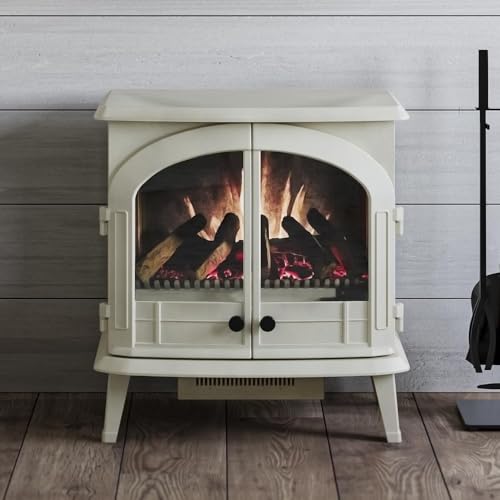
Modern Ember Harlowe Freestanding Electric Fireplace Stove Heater in Cream with Multi-Color Ember Bed | Smart Technology | Alexa/WiFi Enabled | 1500W | Indoor Portable Heater | Safety Shutoff
Check price on AmazonFrequently Asked Questions
What is a modern freestanding wood burning fireplace?
A modern freestanding wood burning fireplace is a self-contained heating appliance that stands independently in a room, featuring a contemporary design with clean lines, large glass viewing windows, and advanced combustion technology for efficient heating.
How much does a modern freestanding wood burning fireplace cost?
Modern freestanding wood burning fireplaces typically range from $800 to $3,500 for the unit itself. Professional installation, chimney systems, and hearth pads can add $1,500 to $4,000 or more depending on your home's configuration.
Do modern wood burning fireplaces need a chimney?
Yes, most freestanding wood burning fireplaces require a chimney or flue system to vent smoke and gases safely outdoors. Some models can use a direct vent system through an exterior wall, but all require proper ventilation.
Are modern wood burning fireplaces efficient?
Yes, modern EPA-certified wood burning fireplaces achieve efficiency ratings of 60-80%, significantly higher than traditional open fireplaces which typically operate at 10-30% efficiency. They produce more heat with less wood and fewer emissions.
What size freestanding wood burning fireplace do I need?
As a general rule, you need approximately 1 kW of heat output per 10 square meters (or 1 BTU per 10 square feet) of space in a well-insulated home. A 1,500 square foot home typically requires a fireplace with 40,000-60,000 BTU output.
Can I install a freestanding wood burning fireplace myself?
While some homeowners with advanced DIY skills may attempt installation, professional installation is strongly recommended. Wood burning fireplace installation involves complex venting, clearances, and building codes that must be followed for safety and insurance purposes.
Final Thoughts: Is a Modern Freestanding Wood Burning Fireplace Right for You?
A modern freestanding wood burning fireplace is more than a heating appliance — it's a design statement and a lifestyle investment. It offers unmatched ambiance, serious heating performance, and a level of energy independence that few other home features can match. If you have the space, the venting options, and the budget, it's one of the most rewarding upgrades you can make to your home.
Before you buy, take the time to measure your room, understand your heating needs, and consult with a certified hearth professional. Then choose a stove that matches both your practical requirements and your personal style. With the right model and proper installation, your modern freestanding wood burning fireplace will keep you warm and inspired for decades to come.