
Entertainment Center with Stereo Equipment: The Complete Buying Guide
Integrating high-fidelity audio into your living room requires more than just a place to put your TV. Discover how to choose an entertainment center that houses your stereo equipment safely, sounds great, and looks stunning.
View Top RecommendationsWhy an Integrated Setup Matters: A standard TV stand often lacks the depth, ventilation, and weight capacity required for amplifiers, receivers, and turntables. An entertainment center designed with stereo equipment in mind protects your investment and ensures optimal acoustic performance. Whether you are a vinyl enthusiast or a home theater buff, the right furniture is the foundation of your audio experience.
Why Your Stereo Equipment Needs a Dedicated Entertainment Center
Placing a heavy receiver or a sensitive turntable on a generic TV stand can lead to serious problems. From overheating to vibration distortion, the wrong furniture can degrade both the lifespan and the sound quality of your gear. A dedicated entertainment center for TV and record player is engineered to handle the unique demands of audio components.
Weight Capacity
Stereo amplifiers and receivers can weigh upwards of 30–50 lbs. Standard particle board shelves may sag over time. Specialized centers use thicker materials or reinforced shelving to support heavy audio gear securely.
Ventilation & Heat
Audio equipment generates significant heat. Enclosed cabinets without proper airflow can cause your receiver to overheat, leading to performance issues or permanent damage. Look for open-back designs or built-in ventilation channels.
Vibration Control
Turntables are highly sensitive to vibrations. A wobbly or lightweight stand can cause skipping and distorted sound. A solid, well-braced entertainment center helps isolate your components from external vibrations.
Cable Management
Multiple components mean multiple cables. A center with dedicated cable management cutouts keeps your setup organized, reduces clutter, and makes it easier to swap or upgrade equipment.
Key Features to Look For in a Stereo Entertainment Center
When shopping for the ideal unit, keep these critical features in mind to ensure your stereo equipment is housed safely and functions optimally.
| Feature | Why It Matters | What to Look For |
|---|---|---|
| Adjustable Shelving | Different components have different heights (e.g., a turntable vs. a slim CD player). | Shelves that can be repositioned to accommodate tall receivers or integrated amps. |
| Open Back Design | Allows heat to escape and provides easy access for cables. | Open or semi-open back panels, or solid backs with pre-drilled cable management holes. |
| Weight Rating | Prevents sagging and ensures stability for heavy amplifiers. | A minimum of 50 lbs per shelf for audio components; more for large receivers. |
| Depth | Receivers and turntables are deeper than standard media players. | At least 18–20 inches of interior depth for most stereo receivers. |
| Cable Management | Keeps wires organized and protects connections from accidental pulls. | Pre-drilled holes, grommets, or open shelving for easy routing. |
Types of Entertainment Centers for Stereo Setups
The style of your entertainment center should complement your space and your gear. Here are the most popular configurations for integrating stereo equipment.
Open-Shelf Media Consoles
- Excellent ventilation for heat-generating amplifiers.
- Easy access to cables and components.
- Visually lighter, making small rooms feel larger.
- Often more affordable than enclosed cabinets.
Enclosed Cabinets with Doors
- Hides clutter and protects equipment from dust and pets.
- Provides a cleaner, more formal aesthetic.
- Must have proper ventilation (slatted or glass doors) to prevent overheating.
- Can be more expensive and heavier.
For a more tailored look, consider a media unit that offers a mix of open and closed storage. If your space is tight, a tall TV console for a 65-inch TV can provide vertical storage for audio gear without taking up too much floor space. For those who love a vintage vibe, a modern TV console with record storage is a perfect marriage of form and function.
Sizing and Placement Tips for Optimal Sound
Where you place your entertainment center and how you arrange your components can dramatically affect sound quality. Follow these guidelines to get the best performance from your system.
- Speaker Placement: If you are using bookshelf speakers, place them on the top shelf or on dedicated stands. Tweeters should be at ear level when seated. Avoid placing speakers inside enclosed cabinets, which can muffle sound.
- Turntable Isolation: Place your turntable on a solid, level surface, ideally on a dedicated shelf that is not shared with other vibrating components. Some enthusiasts use isolation feet or a separate wall shelf for their turntable.
- Amplifier Ventilation: Never stack components directly on top of each other. Leave at least 2–3 inches of clearance above your receiver. If your cabinet has a closed back, consider removing it or adding a small fan.
- TV and Center Channel: If you have a center channel speaker, place it on the top shelf directly below or above your TV, angled slightly upward toward the listener.
Materials and Aesthetics: Matching Your Decor
Your entertainment center is a major piece of furniture, so it should reflect your personal style. Here are some popular material choices and their benefits.
Solid Wood
Offers the best vibration damping and durability. Ideal for high-end audio setups. A solid wood entertainment center for a 65-inch TV is a timeless investment that can last for decades.
Metal and Glass
Provides a modern, industrial look. Glass shelves are easy to clean but can transmit vibrations more than wood. Look for tempered glass and sturdy metal frames.
Engineered Wood
A budget-friendly option that comes in a wide range of finishes. High-quality MDF or particle board with a thick veneer can be very sturdy if properly constructed.
Mixed Materials
Combines wood, metal, and glass for a contemporary look. A mid-century modern TV console for a 70-inch TV often features a mix of walnut wood and metal legs.
Budget Considerations
Entertainment centers with stereo equipment range widely in price depending on materials, size, and brand. Here is a general idea of what to expect:
- Budget-Friendly ($200–$500): Engineered wood units with basic cable management. Good for starter setups or smaller rooms.
- Mid-Range ($500–$1,200): Better materials, adjustable shelving, and more thoughtful designs. Often includes features like tempered glass and integrated power strips.
- High-End ($1,200+): Solid wood construction, custom sizing, premium hardware, and superior vibration isolation. Designed for serious audiophiles.
Remember that protecting your audio investment is key. A slightly higher upfront cost for a sturdy, well-ventilated unit can save you from costly repairs or replacements down the line. For those looking to organize smaller accessories, consider storage bins for entertainment center to keep remotes and cables tidy.
Recommended Entertainment Centers with Stereo Equipment
⚠️ AFFILIATE DISCLOSURE: This website contains affiliate links. As an affiliate Associate, we earn from qualifying purchases. If you make a purchase through these links, we may receive a small commission at no additional cost to you. Read our full affiliate policy.

Armocity AV Media Stand, Stereo Stands and Racks Small Entertainment Center | Corner Shelf Stand with Power Strip & LED Lights, Audio Tower HIFI Rack Stereo Shelf CRT TV Stand, 4 Tier, Rustic Brown
Check price on Amazon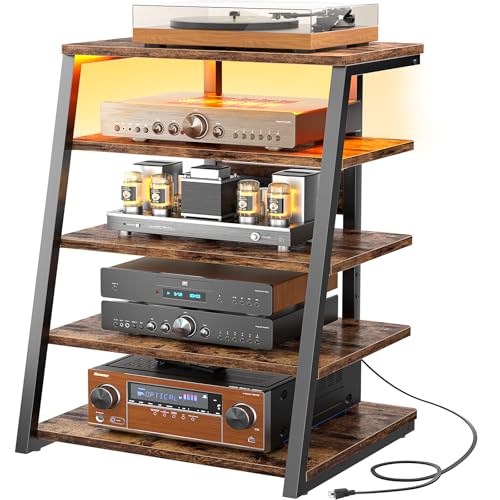
Armocity AV Media Stand, Stereo Stands and Racks Small Entertainment Center | Corner Shelf Stand with Power Strip & LED Lights, Audio Tower HIFI Rack Stereo Shelf CRT TV Stand, 5Tier, Rustic Brown
Check price on Amazon
Armocity AV Media Stand, Stereo Stands and Racks Small Entertainment Center | Corner Shelf Stand with Power Strip & LED Lights, Audio Tower HIFI Rack Stereo Shelf CRT TV Stand, 5 Tier, Black Walnut
Check price on Amazon
Aquzee Game Console Shelf, 4-Tier Video Gaming Consoles Stand | With Outlet & RGB Light, Small Media Entertainment Center, Audio Stereo Storage Organizer, Playroom Furniture, Stereo Stands
Check price on Amazon
Armocity AV Media Stand, Stereo Stands and Racks Small Entertainment Center | Corner Shelf Stand with Power Strip & LED Lights, Audio Tower HIFI Rack Stereo Shelf CRT TV Stand, 5 Tier, Black Walnut
Check price on Amazon
Armocity AV Media Stand, Stereo Stands and Racks Small Entertainment Center | Corner Shelf Stand with Power Strip & LED Lights, Audio Tower HIFI Rack Stereo Shelf CRT TV Stand, 4 Tier, Black Walnut
Check price on Amazon
HOOBRO Game Console Shelf, 4-Tier Video Gaming Consoles Stand with Outlet & RGB Light, Audio Rack Tower for Turntable, Stereo Equipment, Wooden Entertainment Storage Stand, Black BB38UDCJ01
Check price on Amazon
XEOKXOIT 3 Tier AV Media Stand, Audio Rack Tower Stereo Components Cabinet | Home Theatre CD Record Player Stereo Receiver Equipment Rack with Adjustable Wood Shelves, Load 220lbs (Black)
Check price on AmazonFrequently Asked Questions
Can I put a stereo receiver in a closed cabinet?
It is not recommended unless the cabinet has active ventilation (like a fan) or ample passive airflow (slatted doors, open back). Receivers can get very hot and may overheat in an enclosed space, leading to reduced lifespan or failure.
How much weight can a typical entertainment center shelf hold?
This varies widely. Always check the manufacturer's specifications. A good rule of thumb is that a quality shelf should hold at least 50 lbs. Solid wood shelves can often hold much more. Avoid placing heavy amplifiers on glass shelves unless they are specifically rated for that weight.
What is the ideal height for a turntable shelf?
Ideally, your turntable should be at a comfortable waist height for easy access, roughly 30–36 inches from the floor. More importantly, it should be on a stable, level surface that is isolated from vibrations from speakers or foot traffic.