
Bedside Lamps: The Complete Buying Guide
Everything you need to know about choosing the perfect bedside lamps for your bedroom — from size and brightness to style and smart features. Find the right light for reading, relaxing, and sleeping better.
Start Your SearchBedside lamps are one of the most overlooked pieces of bedroom furniture, yet they have an outsized impact on how your bedroom looks and feels. The right lamp transforms a nightstand into a functional reading station, adds a warm glow that helps you wind down, and ties your bedroom decor together. The wrong one — too tall, too bright, or poorly placed — can cause glare, eye strain, and a space that never quite feels finished.
If you are in the research phase of buying a bedside lamp, you already know you need one. What you likely need now is clarity: how tall should it be? How bright? Warm or cool light? Should both lamps match? This guide answers those questions in plain language, so when you finish reading you can confidently click "add to cart" on the right lamp for your bedroom.
Quick answer: The ideal bedside lamp is 24–27 inches tall (bottom of the shade at eye level when seated), produces 400–800 lumens of warm white light (2700K–3000K), and sits on a nightstand that is within 2–3 inches of your mattress height. If you share the bed, choose a dimmable or directional lamp.
What You'll Learn in This Guide
Why Bedside Lighting Matters More Than You Think
Bedside lighting does three jobs at once: it helps you see, it helps you relax, and it helps you sleep. A harsh overhead light in the evening suppresses melatonin and makes it harder to fall asleep. A warm, low-level bedside lamp does the opposite — it signals to your brain that the day is winding down. That is why lighting specialists recommend layered lighting in bedrooms, with bedside lamps as the primary layer.
Beyond sleep, bedside lamps are practical. They let you read without waking your partner, check your phone without blasting your eyes, and get up in the middle of the night without stumbling. If your bedroom also serves as a TV or media space, a good bedside lamp complements the ambient glow of your screen. For ideas on coordinating bedroom media furniture with your lighting, see our guide to a TV on top of dresser in bedroom setup, where lamp placement and screen height work together.
Finally, bedside lamps are decor. They are one of the few functional items in a bedroom that also act as a design statement. A sculptural ceramic base, a brass arm, or a linen drum shade can carry the entire color story of a room. If you are building a cohesive bedroom or living space, the same principles of balance and proportion apply to dimmable floor lamps for living room arrangements — scale and light quality matter just as much as style.
How to Choose the Right Size Bedside Lamp
Size is the number one mistake people make with bedside lamps. A lamp that is too short forces you to hunch over to read. A lamp that is too tall towers over the bed and creates glare. The fix is simple: match the lamp to your nightstand and your seated eye level.
The height rule
When you sit on the edge of your bed, the bottom of the lampshade should be at or slightly below your eye level. For most adults on a standard bed (mattress top around 24–25 inches), that means the lamp should stand roughly 24–27 inches tall from the nightstand surface to the top of the shade. A common formula is: nightstand height + 12 to 18 inches = ideal lamp height.
The width rule
The lamp shade should be no wider than the nightstand it sits on, ideally leaving 1–2 inches of surface on each side. A shade that overhangs the nightstand looks cramped and is easy to knock over. For a standard 20-inch-wide nightstand, look for a shade in the 12–16 inch diameter range.
| Nightstand Height | Recommended Lamp Height | Typical Shade Diameter |
|---|---|---|
| 20–22 inches (low) | 22–26 inches | 10–13 inches |
| 24–26 inches (standard) | 24–27 inches | 12–16 inches |
| 28–30 inches (tall) | 28–32 inches | 14–18 inches |
If your nightstand is unusually small — for example, in a compact apartment bedroom — consider a wall-mounted or clamp-on bedside lamp instead of a table lamp. These free up surface space and are ideal for tight layouts. The same space-saving mindset applies to TV stands with storage for small spaces, where every inch of surface area counts.
Brightness and Color Temperature: The Science of Good Bedside Light
Two numbers determine whether a bedside lamp feels good or terrible: lumens (brightness) and Kelvin (color temperature). Get these right and almost any lamp will work. Get them wrong and even an expensive designer lamp will feel off.
Lumens: how bright should a bedside lamp be?
For general bedside ambience, 200–400 lumens is plenty. For reading in bed, aim for 400–800 lumens. Anything above 800 lumens is usually too bright for a bedside setting unless it is a directional reading light pointed at a book. If you are unsure, choose a lamp with a dimmer — you can always turn it down.
Kelvin: warm vs. cool light
Color temperature is measured in Kelvin (K). For bedrooms, warmer is almost always better:
- 2200K–2700K: Very warm, candle-like. Great for winding down and romantic ambience.
- 2700K–3000K: Warm white. The sweet spot for bedside reading lamps — easy on the eyes and sleep-friendly.
- 3500K–4100K: Neutral white. Acceptable for task lighting but can feel clinical in a bedroom.
- 5000K+: Daylight. Avoid at the bedside — it suppresses melatonin and feels harsh at night.
Pro tip: Look for bulbs labeled "soft white" (2700K) or "warm white" (3000K). Avoid "daylight" bulbs at the bedside. If you want a single lamp to do double duty for reading and ambience, choose a dimmable 2700K bulb and a lamp with a three-way switch.
If you are coordinating bedside lighting with other lamps in the room, keep the color temperature consistent. Mixing a 2700K bedside lamp with a 5000K ceiling fixture creates an uncomfortable color clash. The same principle applies when pairing bedside lamps with dimmable floor lamps for living room — match the Kelvin rating across fixtures for a cohesive glow.
Bedside Lamp Styles and Materials
Once size and brightness are sorted, style becomes the fun part. Bedside lamps come in a handful of broad categories, each with its own personality and practical trade-offs.
Ceramic and porcelain table lamps
The classic bedside lamp. Ceramic bases are heavy (so they don't tip easily), come in every color and glaze imaginable, and pair well with fabric shades. They suit traditional, transitional, and mid-century living room aesthetics alike. Look for a felt or cork base pad to protect your nightstand — the same protection principle behind a TV stand protector.
Metal and brass lamps
Metal bases — brass, nickel, matte black, or bronze — are sleek and durable. They work especially well in modern, industrial, and minimalist bedrooms. A slim brass task lamp with an adjustable arm is a great choice if you read in bed and want directional light.
Glass and crystal lamps
Glass bases add sparkle and visual lightness. They reflect light beautifully and suit glam, coastal, and contemporary bedrooms. Glass is heavier than it looks and easy to clean, but it can show dust and fingerprints more readily.
Wood and natural material lamps
Wood, rattan, bamboo, and cork bases bring warmth and texture. They pair naturally with rustic, boho, and Scandinavian bedrooms. If your bedroom furniture leans toward rustic TV consoles or natural wood tones, a wood-based bedside lamp will tie the room together.
Integrated LED and rechargeable lamps
Modern bedside lamps increasingly use integrated LEDs, which never need bulb replacement and run cool. Rechargeable cordless lamps are a game-changer for renters and small spaces — you can move them anywhere without an outlet. They are also safer for kids' rooms because there is no cord to trip on.
| Material | Best For | Maintenance | Typical Price |
|---|---|---|---|
| Ceramic | Traditional, transitional, colorful bedrooms | Wipe with damp cloth | $40–$150 |
| Metal / Brass | Modern, industrial, minimalist | Dust; polish brass occasionally | $50–$250 |
| Glass / Crystal | Glam, coastal, contemporary | Glass cleaner; handle carefully | $60–$300 |
| Wood / Rattan | Rustic, boho, Scandinavian | Dust; avoid moisture | $35–$180 |
| Integrated LED | Modern, renters, kids' rooms | None (no bulb changes) | $30–$120 |
Shade Shapes and Light Direction
The shade controls how light leaves the lamp. This matters more than most shoppers realize, because a beautiful lamp with the wrong shade can be unusable for reading.
Drum shades
Cylindrical drum shades cast light evenly in all directions. They are the most versatile and work with almost any base. A drum shade in a light color (white, cream, oatmeal) maximizes brightness; a darker shade mutes it for ambience.
Empire and tapered shades
Empire shades are wider at the bottom than the top, which pushes more light downward — great for reading. They suit traditional and transitional lamps and look elegant on ceramic bases.
Rectangular shades
Rectangular shades direct light in a more focused pattern and look sharp on modern, angular lamp bases. They are a good choice for bedside lamps on narrow nightstands because they take up less visual width.
Directional and swing-arm lamps
If you read in bed and share it with a partner, a swing-arm or gooseneck lamp is the best choice. You can aim a narrow beam at your book without lighting up the whole room. Pair it with a low-lumen bulb for the least disturbance.
Shade color tip: Light-colored shades (white, ivory, linen) transmit more light and make a room feel brighter. Dark shades (black, navy, charcoal) absorb light and create a moodier, more intimate feel. Choose based on whether the lamp is primarily for reading or for ambience.
Smart Features Worth Paying For
Modern bedside lamps offer features that genuinely improve daily life. Here is what is worth the upgrade and what is not.
Dimmers and three-way switches
A dimmer is the single most useful feature on a bedside lamp. It lets you go from bright reading light to a soft nightlight without getting out of bed. Three-way switches (low–medium–high) are a simpler, cheaper alternative. Either is better than a plain on/off switch.
USB and USB-C charging ports
If you charge your phone overnight, a lamp with a built-in USB port is a no-brainer. It eliminates a wall charger, reduces cable clutter, and keeps your phone within arm's reach. Look for USB-C if you have a newer phone. This is especially handy in a compact bedroom where the nightstand doubles as a charging station — similar to how a TV stand with storage for living room consolidates media and device charging in one place.
Touch controls
Touch-sensitive bases let you tap to turn on, tap to dim, or tap to change color temperature. They are convenient and look clean, but they can be accidentally triggered by pets. If you have cats that walk on nightstands, a physical switch may be safer.
Smart home integration
Wi-Fi or Bluetooth-enabled lamps let you control brightness and color from your phone or a voice assistant. Useful if you want scheduled wake-up lighting or scene control. Not essential, but nice if you already run a smart home.
Built-in outlets
Some bedside lamps include a standard AC outlet in the base. This is great for plugging in a laptop, a second charger, or a small fan. Just check the lamp's wattage rating so you do not overload the circuit.
Placement and Pairing Tips
Where you put the lamp and how you pair two lamps can make or break the look of your bedroom.
Position on the nightstand
Center the lamp on the nightstand, or push it slightly toward the back corner to leave room for a book, glass of water, or phone. Leave at least 2 inches of clearance behind the lamp for airflow and cord management. If your nightstand is against a wall with a low outlet, a lamp with a longer cord or a cordless rechargeable model avoids awkward stretching.
Matching vs. mismatched lamps
Matching lamps create symmetry and calm, which suits traditional and transitional bedrooms. Mismatched lamps add personality and work well in eclectic, boho, or boho TV stand-styled rooms. If you go mismatched, keep the height and shade shape similar so the bed area still feels balanced.
Coordinating with bedroom furniture
Your bedside lamps should relate to the other wood and metal tones in the room. If your bedroom has warm wood furniture like a cherry wood TV stand with fireplace, a brass or warm ceramic lamp will harmonize. If your furniture is white or light oak, a matte black or glass lamp adds contrast.
Layering with other bedroom lighting
Bedside lamps work best as part of a layered lighting plan: a ceiling fixture or recessed lights for general illumination, bedside lamps for task and ambience, and perhaps a small accent light for atmosphere. If your bedroom includes a seating area, a floor lamp can round out the layers — the same approach recommended in bright living room tips for balancing multiple light sources.
Safety and Bulb Compatibility
Bedside lamps are electrical devices used near fabric, pillows, and sometimes water. A few safety basics go a long way.
- Check the max wattage. Every lamp has a maximum wattage rating, usually printed on a label near the socket. Never exceed it — overheating is the most common cause of lamp fires.
- Use the right bulb type. If the lamp says "LED only," do not put an incandescent bulb in it. If it accepts incandescent, an LED equivalent is almost always a better choice for heat and energy use.
- Secure the cord. Route cords behind the nightstand, not across walking paths. Use cord clips or a cable raceway if needed.
- Avoid water proximity. Keep lamps at least a few feet from humidifiers, diffusers, and open windows where rain could reach.
- Use a stable base. Heavy bases are safer around kids and pets. If you have a cat that jumps on nightstands, consider a wall-mounted or clamp-on lamp instead.
- Check for UL or ETL certification. This indicates the lamp has passed independent safety testing.
If you have young children or pets, the same safety-first mindset you would apply to a TV stand with storage for small spaces — anchoring, cord management, stable bases — applies to bedside lamps. A lamp that tips easily is a hazard in a room where people sleep.
Bedside Lamp Buying Checklist
Before you buy, run through this checklist. It takes two minutes and prevents most returns.
- Measure your nightstand. Note the height and width. Your lamp should be 12–18 inches taller than the nightstand and no wider than the surface.
- Measure your seated eye level. Sit on the bed and have someone mark where your eyes are. The bottom of the shade should be at or just below that line.
- Decide your primary use. Reading (400–800 lumens, directional shade) vs. ambience (200–400 lumens, drum shade).
- Choose your color temperature. 2700K–3000K for bedrooms. Avoid 5000K+.
- Pick a style that matches your room. Ceramic for traditional, metal for modern, wood for rustic, glass for glam.
- Check the features. Dimmer? USB port? Touch control? Smart home? Buy only what you will use.
- Verify bulb compatibility. Check the socket type (E26 is standard in the US) and max wattage.
- Confirm safety certification. Look for UL or ETL listing.
- Plan for a pair if you share the bed. Matching lamps are the safe choice; mismatched works if heights and shades are similar.
- Consider cordless if outlets are scarce. Rechargeable lamps are excellent for renters and older homes.
Ready to Choose Your Bedside Lamp?
Browse our recommended bedside lamps below — selected for size, brightness, and style that actually work in real bedrooms.
See Recommended LampsFrequently Asked Questions About Bedside Lamps
With this guide in hand, you have everything you need to choose a bedside lamp that looks right, feels right, and works right for your bedroom. Take your measurements, decide your priorities, and enjoy better light — and better sleep — tonight.
Recommended Bedside Lamps
⚠️ AFFILIATE DISCLOSURE: This website contains affiliate links. As an affiliate Associate, we earn from qualifying purchases. If you make a purchase through these links, we may receive a small commission at no additional cost to you. Read our full affiliate policy.
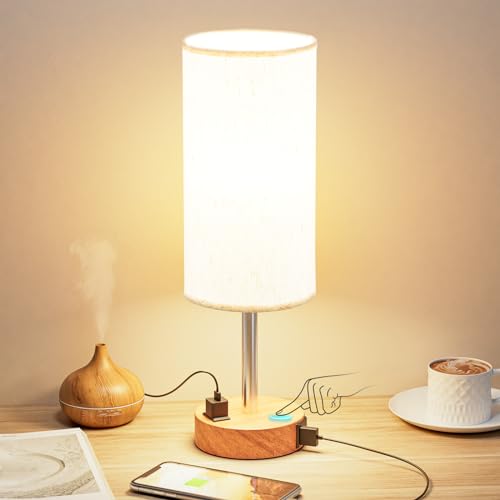
Fenmzee Bedside Table Lamp for Bedroom - Dimmable Touch, USB A+C, AC Outlet | 3-Way Dimmable, LED Bulb Included, Fabric Lampshade, Wood-Grain Metal Base, 14" Small Nightstand Lamp for Desk, Living Room
Check price on Amazon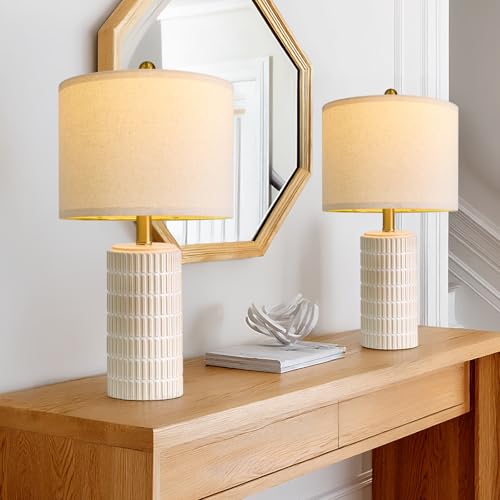
PoKat 20.75" Small Modern Ceramic Table Lamps Set of 2 for Bedroom, White | Bedside Lamps for Nightstands, Farmhouse Home Decor, End Table & Desk Light, Ideal Housewarming New Home Gift for Women Mom
Check price on Amazon
Dicoool Bedside Table Lamp for Bedroom - 3-Way Dimmable Touch Lamp, USB A+C | LED Bulb Included, 14" Small Nightstand Lamp for Desk, Living Room, Guest Room, Cream Fabric Lampshade, Wood-Grain Metal Base
Check price on Amazon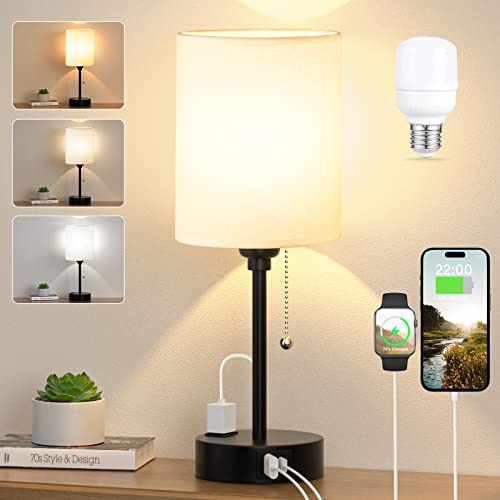
Dicoool Bedside Table Lamp for Bedroom - Small Desk Lamp with USB Ports | USB A+C Ports, AC Outlet, 3 Color Temperatures, LED Bulb Included, White Fabric Shade, Black Metal Base, 14" Nightstand lamp
Check price on Amazon
Fenmzee Bedside Lamps for Bedroom Set of 2 - Table Desk Lamp for Nightstand | 15" Table Lamp for Living Room with Pen Holder & Phone Stand, USB A+C Port, AC Outlet, 3 Color Temperature, LED Bulb Included
Check price on Amazon
Industrial Bedside Lamps Set of 2, Fully Dimmable Desk Lamps for Bedroom | Glass Shade, USB C+A Charging Port & Outlet, Black Nightstand Table Lamps for Living Room, Office, Reading, Vintage
Check price on Amazon
Fenmzee Bedside Lamp for Bedroom Set of 2 - Small Table Lamp for Nightstand | AC Outlet, 3 Color Temperatures, LED Bulb Included, Pull Chain Design, 14" Rectangular Desk Lamp for Dorm/Office, 2-Pack
Check price on Amazon